
Hospital Label Management: The Hidden Time Killer in Healthcare Supply Chains
Paper shelf labels are still common in many hospitals—and they consume far more time than most organizations realize. Discover why label management has become a hidden productivity killer and how electronic shelf labels (ESL) and MOYAFLOW Stream help hospitals streamline material management, improve data quality, and reduce manual workload across procurement, logistics, and nursing.
Hospital Label Management: The Hidden Time Killer in Healthcare Supply Chains
Changes to product master data are part of everyday life in every hospital’s materials management department. New products are introduced, suppliers change, packaging units are updated, or item descriptions and barcodes need to be modified.
While updating this information in an ERP or materials management system usually takes only a few seconds, it often triggers a process that keeps procurement and logistics teams busy for hours: manually updating paper shelf labels.
Hospitals operating with modular supply concepts, Kanban systems, or standardized ward inventories are particularly affected. A single master data change can impact dozens—or even hundreds—of storage locations throughout the hospital.
Because this process has existed for decades, it often goes unnoticed. Yet it remains one of the largest hidden productivity killers in hospital logistics.
Why This Topic Deserves More Attention
When discussing digital transformation in healthcare, the focus is often on electronic health records, robotics or artificial intelligence.
Meanwhile, many hospital supply rooms still rely on workflows that have barely changed in decades.
Paper shelf labels still need to be:
- printed,
- sorted,
- distributed,
- located,
- removed,
- and replaced.
Each individual task appears insignificant.
Across multiple wards, storage rooms and clinical departments, however, these small tasks accumulate into a considerable amount of manual work.
**Insight **A large tertiary care hospital manages up to 40,000 different medical products (Source: BVMed). Even medium-sized hospitals operate thousands of storage locations. As a result, a single master data update often affects numerous shelf labels across the organization.
Why Shelf Labels Need to Be Updated
Product master data changes far more frequently than many people realize.
Typical reasons include:
- introduction of new medical products
- supplier changes
- updated item numbers
- new packaging units
- barcode updates
- changes in storage locations
- assortment optimization
- product standardization initiatives
- adjustments to modular supply concepts
Whenever one of these changes occurs, every affected paper shelf label must be replaced manually.
Modular Supply and Kanban Systems Are Particularly Affected
Hospitals using modular supply concepts or Kanban-based replenishment systems benefit from highly standardized material flows.
However, this standardization also means that identical products are stored in multiple wards simultaneously.
If a product description, item number or packaging unit changes, every affected storage location must be updated accordingly.
Ironically, the better a hospital standardizes its supply chain, the greater the manual effort required to maintain paper shelf labels.
This is one of the key reasons why digital label management is becoming increasingly important.
Eight Steps for a Single Shelf Label
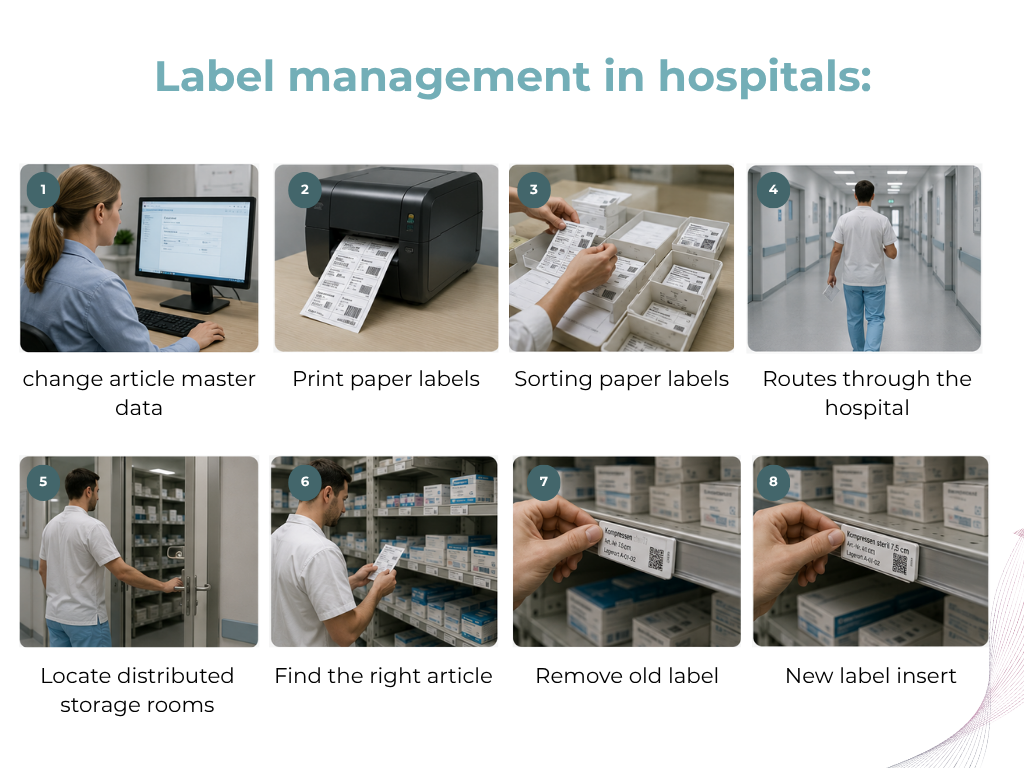
Figure 1: Manual hospital label management workflow
Most people think replacing a shelf label takes only a few seconds.
In reality, the complete process consists of many more activities.
A typical workflow looks like this:
- Product master data is updated.
- New paper shelf labels are printed.
- Labels are sorted by ward.
- Staff walk through the hospital.
- Storage rooms are located.
- The correct product is identified.
- The old label is removed.
- The new label is inserted.
Replacing the label itself usually takes less than a minute.
Most of the time is spent on everything that happens before.
The Real Time Killer Isn’t the Label
The majority of working time is consumed by activities that create little or no added value:
- printing paper labels
- sorting labels
- walking through hospital buildings
- locating storage rooms
- searching for products
- comparing product information
- manually replacing labels
From a Lean Healthcare perspective, these activities represent classic forms of waste (Muda).
Several of the seven Lean wastes occur simultaneously:
- unnecessary transportation
- unnecessary motion
- waiting
- searching
- duplicate work
None of these activities directly contributes to patient care.
They exist solely because information must be physically distributed throughout the hospital.
**💡 Did you know? **Replacing the label itself is rarely the problem.Most of the time is spent printing, sorting, walking through the hospital and locating the correct storage location.
When Minutes Turn into Hours
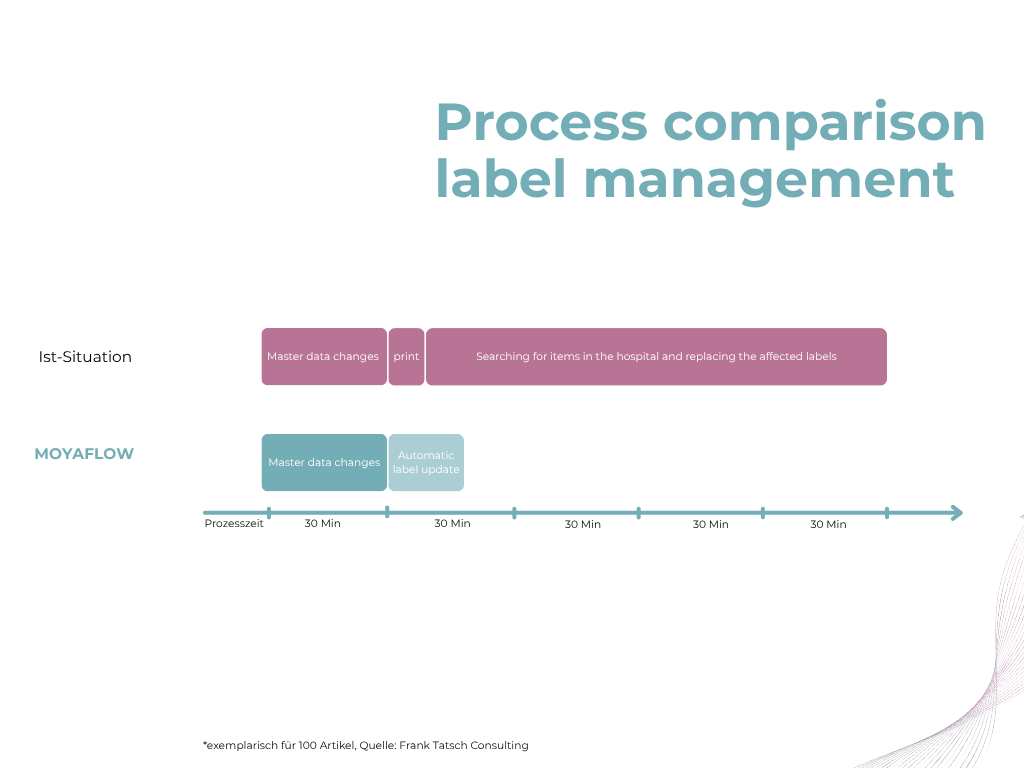
Figure 2: Process comparison – Paper shelf labels vs. Electronic Shelf Labels (ESL)
The difference becomes obvious when looking at the entire workflow.
With a traditional paper-based system, the work does not end once the product master data has been updated. In fact, this is where the manual process begins.
New labels have to be generated, printed, sorted and assigned to the appropriate wards. Logistics staff then walk through the hospital, locate the correct storage rooms, identify the affected products and manually replace every paper shelf label. Even a relatively small update affecting 100 products can easily result in several hours of manual work.
The effort increases significantly during events such as:
- supplier changes,
- product substitutions,
- assortment standardization,
- modular supply redesigns,
- or hospital-wide master data updates.
What takes only a few minutes in an ERP system can consume hours—or even days—of operational work afterwards.
With a digital approach, the workflow is reduced to just two simple steps:
- Update the product master data.
- Automatically synchronize all Electronic Shelf Labels.
Every manual step in between disappears.
Electronic Shelf Labels Do More Than Replace Paper
Electronic Shelf Labels (ESL) are often viewed simply as a digital replacement for paper labels.
In reality, they fundamentally change how information flows throughout the hospital.
Instead of physically distributing updated information across multiple wards and storage locations, data is maintained once within a central system and automatically synchronized to every affected shelf label.
This eliminates activities such as:
- printing replacement labels,
- sorting labels,
- distributing them across the hospital,
- walking between wards,
- locating storage rooms,
- searching for products,
- and manually replacing labels.
Perhaps even more importantly, everyone works with exactly the same information.
While paper labels are often updated hours or days later, Electronic Shelf Labels display current product information immediately—directly at the Point of Care.
Label Management Is Actually Data Management
Modern hospital logistics depends on accurate, reliable and consistent data.
Outdated paper labels create much more than unnecessary manual work.
They also increase the risk of:
- incorrect product identification,
- inconsistent information between departments,
- data inconsistencies,
- time-consuming inventory counts,
- unnecessary communication between nursing, procurement and logistics.
Electronic Shelf Labels establish a single source of truth.
Product information is maintained once and automatically synchronized to every relevant storage location.
This transforms label management from a manual maintenance task into a digital information management process.
Building the Foundation for Strategic Procurement and Artificial Intelligence
Digitizing label management delivers far more than operational efficiency.
It creates a reliable data foundation for smarter decision-making throughout the healthcare supply chain.
Hospitals gain valuable insights for:
- strategic procurement,
- product standardization,
- modular supply optimization,
- Fast-, Medium- and Slow-Mover analysis,
- inventory optimization,
- safety stock reduction,
- and future AI-driven demand forecasting.
In other words:
Electronic Shelf Labels are not merely digital displays attached to shelves.
They become an essential building block of a data-driven hospital supply chain.
Only when inventory information is digital, standardized and continuously updated can advanced analytics, business intelligence and artificial intelligence deliver meaningful value.
MOYAFLOW Stream: Update Once – Synchronize Everywhere
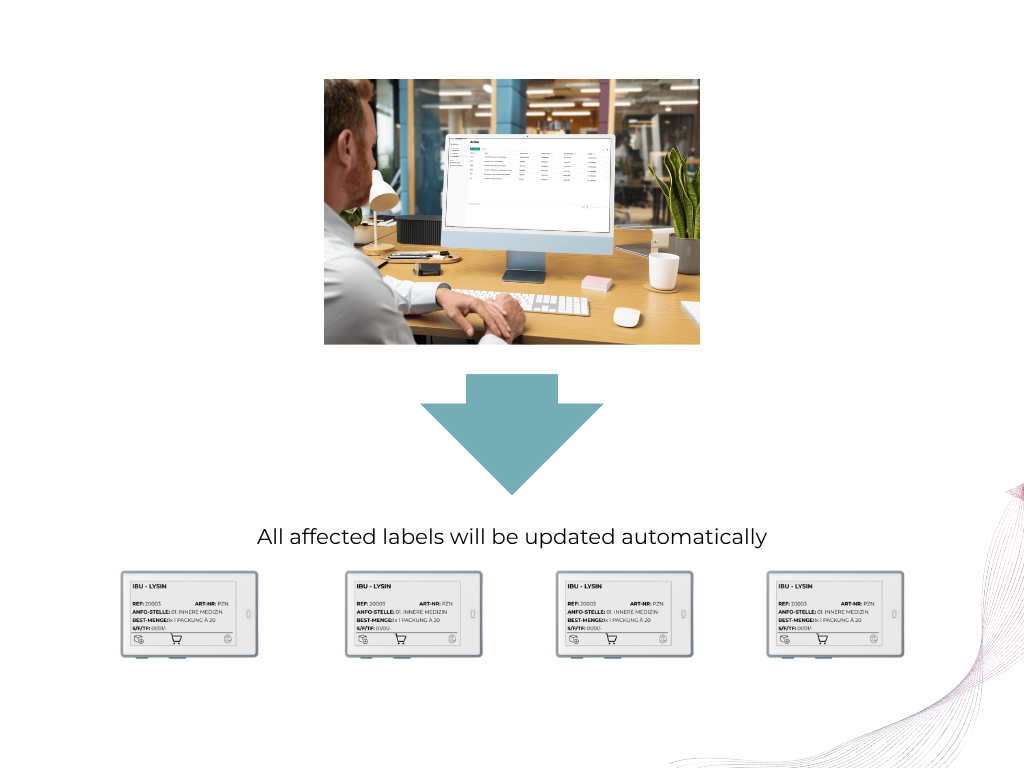
Figure 3: MOYAFLOW Stream automatically updates all Electronic Shelf Labels.
This is exactly where MOYAFLOW Stream comes in. The platform connects Electronic Shelf Labels with existing ERP systems, Materials Management Systems (MMS) and eProcurement or hospital webshop solutions.
Product master data only needs to be maintained once. MOYAFLOW Stream automatically distributes every update to all affected Electronic Shelf Labels—regardless of the ward, department or storage room.
Hospitals operating with modular supply concepts, decentralized ward inventories or Kanban replenishment systems benefit particularly from this centralized approach.
Instead of triggering a hospital-wide manual update process every time product data changes, a single master data update automatically keeps every storage location synchronized.
The benefits go far beyond efficiency.
MOYAFLOW Stream helps hospitals achieve:
- higher data quality,
- consistent product information across all departments,
- fewer manual processes,
- improved patient safety,
- greater supply reliability,
- and significantly lower administrative workload.
Greater Transparency for Procurement, Logistics and Management
Centralized label management also creates a valuable source of operational intelligence.
Together with the MOYAFLOW Dashboard, procurement teams, logistics managers and hospital leadership gain real-time visibility into:
- inventory movements,
- consumption trends,
- stock levels,
- Fast-, Medium- and Slow-Movers,
- storage structures,
- replenishment performance,
- and optimization opportunities within modular supply concepts.
As a result, label management evolves from an administrative necessity into a strategic source of operational data. The same information supports day-to-day logistics while enabling long-term initiatives such as procurement optimization, product standardization, sustainability programs and future AI-supported inventory planning.
Conclusion: Digital Transformation Starts with Everyday Processes
When hospitals talk about digital transformation, the conversation usually focuses on Electronic Health Records (EHR), robotics, artificial intelligence or automation.
Yet some of the greatest efficiency gains are hidden within everyday operational processes.
Hospital label management is a perfect example. For decades, replacing paper shelf labels has been accepted as “part of the job.” However, every printed label, every walk through the hospital and every manual update consumes valuable resources without creating additional value for patients. Electronic Shelf Labels fundamentally change this process.
Instead of manually updating hundreds of storage locations, hospitals manage product information centrally and distribute changes automatically across the entire organization.The result is more than time savings.
Digital label management creates the foundation for:
- higher data quality,
- standardized hospital inventory,
- improved supply reliability,
- lower administrative workload,
- better collaboration between procurement, logistics and clinical staff,
- and data-driven decision making.
Most importantly, it prepares hospitals for the next generation of healthcare supply chain management.
Artificial intelligence, predictive inventory planning and strategic procurement all rely on one prerequisite:
Reliable, standardized and real-time inventory data.
Digital label management is one of the first building blocks toward achieving exactly that.
Key Takeaways
✔ Updating paper shelf labels is still a highly manual process in many hospitals.
✔ Modular supply concepts and Kanban systems increase the number of storage locations affected by every master data change.
✔ Most of the effort is not spent replacing labels—but printing, sorting, walking through the hospital and locating inventory.
✔ Electronic Shelf Labels (ESL) eliminate these manual activities completely.
✔ MOYAFLOW Stream automatically synchronizes product master data across all connected Electronic Shelf Labels.
✔ The resulting data foundation enables strategic procurement, inventory optimization, sustainability initiatives and future AI applications.
Frequently Asked Questions (FAQ)
Why do hospitals need to replace shelf labels?
Whenever product master data changes—such as product descriptions, item numbers, packaging units, storage locations or barcodes—paper shelf labels need to be updated to ensure accurate inventory information.
Why is paper-based label management so time-consuming?
Replacing the label itself usually takes only a few seconds.
Most of the time is spent printing replacement labels, sorting them, walking through hospital buildings, locating storage rooms and identifying the correct products.
What is modular supply in hospitals?
Modular supply is a standardized inventory concept where multiple wards use identical storage layouts and product assortments.
This improves efficiency but also means that one product master data change can affect many storage locations simultaneously.
What are the advantages of Electronic Shelf Labels (ESL)?
Electronic Shelf Labels automatically display the latest product information after a central update.
They eliminate paper labels, reduce manual work, improve inventory accuracy and ensure that staff always work with current information.
How does MOYAFLOW Stream support hospital logistics?
MOYAFLOW Stream connects Electronic Shelf Labels with existing ERP, Materials Management and eProcurement systems.
Master data only needs to be updated once.
The platform automatically synchronizes every connected shelf label throughout the hospital, reducing manual work while improving transparency and data quality.
What long-term benefits does digital label management provide?
Digitizing hospital label management creates the foundation for:
- strategic procurement,
- standardized inventory management,
- inventory analytics,
- consumption transparency,
- optimized safety stock,
- AI-driven demand forecasting,
- sustainability initiatives,
- and a resilient healthcare supply chain.
Ready to Modernize Your Hospital Logistics?
Paper-based processes have served hospitals for decades.
Today’s challenges require a different approach.
By combining Electronic Shelf Labels, digital material request workflows and centralized master data management, hospitals can significantly reduce administrative workload while creating the foundation for data-driven operations.
MOYAFLOW Stream enables exactly this transformation—connecting procurement, logistics and clinical staff through one integrated digital platform.
👉 Contact us to schedule a live demonstration or discuss how digital label management can support your hospital’s logistics strategy.
Sources
- BVMed – Medical Devices in Healthcare
- GS1 Germany – Standards for Healthcare Supply Chains
- Lean Enterprise Institute – Lean Healthcare & Muda
- Healthcare Supply Chain Association (HSCA)
- MOYAFLOW Pilot Projects and Customer Experience